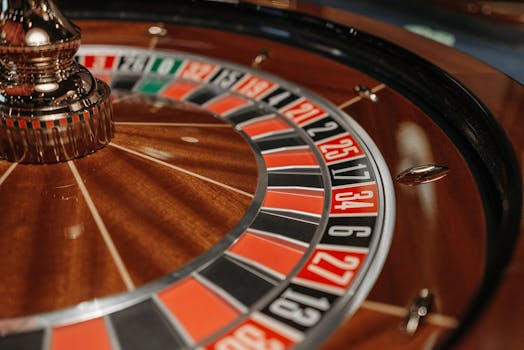
Roulette has long been a symbol of glamour, chance, and excitement in the world’s most celebrated casinos. With its spinning wheel and bouncing ball, the game’s simplicity belies a fascinating complexity that has captivated mathematicians, gamblers, and casual players for centuries. But what is it about roulette that makes it such a compelling enigma? To truly appreciate its allure, it’s essential to decode the game’s structure, its odds, and the psychology that keeps players coming back for more. In this comprehensive exploration, we’ll delve into the heart of roulette, unveiling its history, mechanics, variations, and the mathematical realities that drive its enduring mystery.
The Origins and Evolution of Roulette
The story of roulette begins in 18th-century France, where the word “roulette” literally means “little wheel.” The game is believed to have evolved from older European wheel games such as Roly-Poly, Biribi, and Ace of Hearts, but its modern form is often credited to Blaise Pascal, the famed mathematician and inventor, who inadvertently created a primitive version while attempting to design a perpetual motion machine.
By the late 1700s, roulette had become a fixture in French casinos, quickly spreading across Europe and eventually reaching the United States in the 19th century. Over time, the game underwent several modifications, most notably the addition of the zero (and later the double zero in American versions) to increase the house edge.
.png)
Today, roulette is available in brick-and-mortar casinos, online platforms, and even live dealer formats, with a global player base spanning millions. According to the American Gaming Association, roulette is among the top five most popular table games worldwide, generating billions in annual revenue.
Dissecting the Roulette Wheel: European vs. American Versions
At its core, roulette is surprisingly straightforward: players bet on where a ball will land as a wheel spins. Yet, the design of the wheel itself is central to the game’s complexity and house advantage.
The European wheel features 37 pockets, numbered 1-36 plus a single zero (0). The American wheel, by contrast, has 38 pockets—numbers 1-36, a single zero (0), and a double zero (00). This small difference has a significant impact on player odds and house edge.
Here’s a side-by-side comparison:
| Feature | European Roulette | American Roulette |
|---|---|---|
| Pockets | 37 (1-36 + 0) | 38 (1-36 + 0 + 00) |
| House Edge | 2.70% | 5.26% |
| Odds of Single Number Win | 1 in 37 (2.7%) | 1 in 38 (2.63%) |
| Popularity | Europe, Asia, Online Casinos | North America, Some Online Casinos |
The single zero on the European wheel means players have a slightly better chance over time. In fact, the house edge in European roulette is almost half that of its American counterpart, making it the preferred version for savvy players.
How Bets Work: Inside, Outside, and Special Wagers
Roulette’s betting system is both flexible and intricate, offering a range of options to suit every risk appetite. The betting area on the table corresponds to the wheel’s numbers and colors, enabling a blend of straightforward and complex wagers.
Inside Bets: - Straight Up: Betting on a single number (pays 35:1) - Split: Betting on two adjacent numbers (pays 17:1) - Street: Betting on a row of three numbers (pays 11:1) - Corner: Betting on a block of four numbers (pays 8:1) - Six Line: Betting on two adjacent rows (pays 5:1) Outside Bets: - Red or Black: Betting on the color (pays 1:1) - Odd or Even: Betting on the number’s parity (pays 1:1) - Low or High: Betting on numbers 1-18 or 19-36 (pays 1:1) - Dozen: Betting on groups of 12 numbers (pays 2:1) - Column: Betting on a vertical column (pays 2:1)Special Bets: Some roulette tables, especially in European casinos, offer special bets such as “Voisins du Zéro,” “Tiers du Cylindre,” and “Orphelins,” which cover specific sections of the wheel. These bets, often called “French bets,” use unique chips and layouts.
With dozens of possible betting combinations, the game’s apparent simplicity is layered with strategic depth. The house edge, however, remains constant—no betting pattern can alter the mathematical advantage the casino holds.
The Mathematics of Chance: Odds, Probabilities, and the House Edge
Roulette is a game of pure chance—each spin is independent, unaffected by previous outcomes. Nevertheless, understanding the odds is crucial to decoding the game’s mystery.
For instance, in European roulette, the probability of the ball landing on any single number is 1 in 37, or about 2.7%. In American roulette, it’s 1 in 38, or about 2.63%. The payout for a single-number bet is 35:1, but the true odds are less favorable, underscoring the house edge.
The house edge—the mathematical advantage the casino has over players—is built into the payouts. In European roulette, the edge is 2.70%, while American roulette’s double zero pushes this to 5.26%. Over thousands of spins, this edge ensures the casino’s profitability.
Some casinos, especially in Europe, offer the “La Partage” or “En Prison” rules for even-money bets. With these rules, if the ball lands on zero, players either lose only half their bet (“La Partage”) or have their bet “imprisoned” for the next spin (“En Prison”). Both rules can reduce the house edge on even-money bets to as low as 1.35%, making them highly favorable for strategic players.
The Psychology Behind Roulette: Why We Play
Roulette is not just a game of numbers; it’s a game of emotions. The anticipation as the ball slows, the thrill of a near-miss, and the communal excitement around the table all contribute to its enduring appeal.
Psychologists have found that roulette’s combination of fast outcomes and variable rewards stimulates the brain’s reward centers. The unpredictability of the spin can trigger a dopamine rush, similar to the excitement experienced in other forms of gambling or even extreme sports.
Moreover, the illusion of control—choosing your numbers, colors, or betting strategies—gives players a sense of involvement, even though the outcome is random. This phenomenon, known as the “illusion of control,” can sustain player interest and encourage longer play sessions.
A 2022 study by the University of Nevada found that players are especially drawn to roulette for its social aspect. Unlike slots, roulette tables foster interaction, conversation, and collective suspense. The communal nature of the game is a key reason it remains so popular in casinos worldwide.
Famous Roulette Stories: From Legends to Record Wins
Throughout its long history, roulette has produced legends, myths, and astonishing stories—some true, others embellished by time.
One of the most famous is the tale of Charles Wells, the real-life inspiration for the song “The Man Who Broke the Bank at Monte Carlo.” In 1891, Wells reportedly won over one million francs in just a few days at the iconic casino, using what he claimed was a mathematical system (though luck almost certainly played a major role).
In more recent times, British gambler Ashley Revell made headlines in 2004 when he sold all his possessions and placed his entire net worth—$135,300—on red at a Las Vegas roulette table. The ball landed on red 7, doubling his money in a single, nerve-wracking spin.
These stories highlight the game’s potential for dramatic windfalls, but also serve as reminders of the risks and the role of chance in every outcome.
Roulette in the Digital Age: Online Innovations and Live Gaming
The arrival of online casinos has brought roulette to a new generation of players. Digital versions now offer everything from classic European and American wheels to themed variations and live dealer tables streamed from real casinos.
Online roulette has expanded player access and introduced innovative features such as autoplay, customizable betting patterns, and detailed statistics. In 2023, the global online gambling market surpassed $92 billion, with roulette among the top three games by volume.
Live dealer roulette, where real croupiers spin a physical wheel in real time while players watch via HD stream, has become especially popular. This hybrid experience combines the convenience of online play with the authenticity and social interaction of a traditional casino.
Additionally, cutting-edge random number generators (RNGs) ensure fairness and true randomness in every spin, addressing concerns about game integrity and transparency.
Roulette’s Enduring Legacy: More Than Just a Game of Chance
Roulette’s enduring appeal lies in its elegant simplicity, its rich history, and the eternal mystery of chance versus strategy. Despite the mathematical inevitability of the house edge, players return for the thrill, the community, and the possibility—however remote—of a life-changing win.
Whether you’re drawn by the hypnotic spin of the wheel, the camaraderie of the table, or the intricate dance of probability and luck, roulette remains a timeless classic. Its mystery is not just in the numbers, but in the human stories and emotions it continues to inspire.