Mathematics and casino games are intertwined in a relationship as old as gambling itself. The spinning roulette wheel, the shuffle of cards, and the roll of dice all dance to the tune of probability, statistics, and calculated odds. Far from being games of pure luck, casino games are guided by mathematical principles that shape everything from game design to player strategy and even the house’s profits. This article explores the fascinating connection between mathematics and casino games, demonstrating how numbers determine the outcome, fairness, and excitement of the gambling world.
The Mathematical Foundations of Casino Games
At the heart of every casino game lies a set of mathematical rules. Whether it's the probability of drawing an ace in blackjack or the odds of hitting a particular number in roulette, mathematics governs the outcomes. Casino games can generally be grouped into two broad categories: games of chance (such as slots or roulette) and games of skill with an element of chance (such as poker or blackjack).
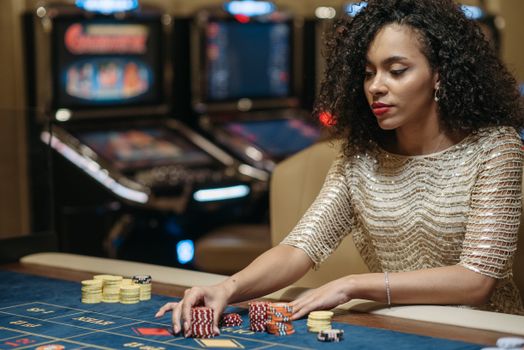
Probability theory is the cornerstone of all these games. For example, in American roulette, the wheel contains 38 pockets (1-36, 0, and 00). The chance of the ball landing on any given number is 1 in 38, or approximately 2.63%. This probability directly informs payouts and strategies.
.png)
Casinos also use the concept of expected value (EV)—the average amount a player can expect to win or lose per bet—to set their games. For instance, if a $1 bet on a single number in roulette has a 1/38 chance of winning $35 (plus your dollar back), the expected value is:
EV = (1/38 x $36) + (37/38 x -$1) ≈ -$0.053
This means for every dollar bet, the player loses about 5.3 cents on average—a concept known as the house edge.
House Edge: The Casino’s Mathematical Advantage
One of the most important mathematical concepts in casino games is the house edge. This figure represents the average percentage of each wager that the casino expects to keep over the long term. The house edge is built into the rules and payouts of every game, ensuring that the casino remains profitable.
For example, let’s compare the house edge of several popular casino games:
| Game | House Edge (%) | Key Mathematical Element |
|---|---|---|
| Blackjack (Basic Strategy) | 0.5% | Card Probability |
| European Roulette | 2.7% | Single Zero Wheel |
| American Roulette | 5.26% | Double Zero Wheel |
| Slots | 2% - 10% | Random Number Generation |
| Craps (Pass Line) | 1.41% | Dice Probability |
This table demonstrates how mathematical design influences both the player's experience and the casino's profitability. Games like blackjack, when played with optimal strategy, can have a house edge as low as 0.5%, while American roulette’s double zero increases the edge to over 5%.
Probability and Payouts: How Math Shapes Game Design
Designing a casino game involves a careful balance between excitement and profitability, achieved through probability and payout structures. Game developers and casino managers use mathematics to ensure that their games are both engaging and profitable.
Take slot machines, for instance. Modern slots use Random Number Generators (RNGs) to determine outcomes. The probability of hitting a jackpot can be extremely low; in some progressive slots, the odds can be one in 50 million or less. Yet, the game is designed to provide smaller, more frequent wins to maintain player interest.
In table games, payouts are directly tied to probabilities. For example, in baccarat, betting on the “banker” hand wins 45.86% of the time (excluding ties), while the “player” hand wins 44.62%. The banker bet pays 1:1 but with a 5% commission, reflecting its slightly higher probability of winning and ensuring the house retains its edge.
Mathematical modeling is essential in setting these payouts. If the payouts were too generous relative to the odds, the casino would lose money. If too stingy, players would lose interest. The sweet spot is found through careful calculations, often using simulation and statistical analysis.
Player Strategies: Beating the Odds with Mathematics
While the house always has the edge in the long run, skilled players use mathematics to improve their chances in certain games. Card counting in blackjack is a famous example. By keeping track of the cards that have been played, players can estimate the likelihood of certain cards appearing next, adjusting their bets and decisions accordingly. This method, popularized in the 1960s and 70s, can shift the odds in favor of the player by up to 1%.
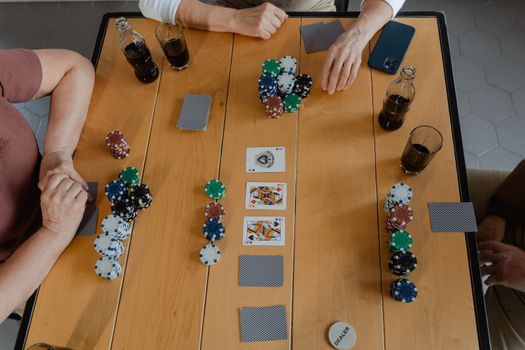
Poker, too, is a game deeply rooted in mathematics. Successful players constantly calculate pot odds, implied odds, and probabilities of improving their hand. For example, if you are holding four cards to a flush after the flop in Texas Hold’em, there are nine cards left in the deck that will complete your flush. With 47 unknown cards, your chance of hitting the flush on the turn is 9/47, or about 19.15%.
Even in games of pure chance, such as roulette or craps, players employ betting systems like the Martingale or D’Alembert, which are based on mathematical progressions. While these systems cannot overcome the house edge, they illustrate how deeply mathematics permeates player behavior and strategy.
Randomness, Fairness, and Casino Regulation
Ensuring fairness is another role mathematics plays in casino games. Randomness is crucial; each spin of a slot machine or shuffle of a deck must be unpredictable. Casinos use advanced RNG algorithms, audited by independent agencies, to guarantee this unpredictability.
Statistics are also used in regulatory oversight. In the United States, for example, gaming commissions require that slot machines pay out a minimum percentage over time—often between 80% and 90%. Auditors analyze vast amounts of game data, using statistical sampling to ensure that the actual payout percentages match the programmed odds.
Moreover, mathematics is used to detect cheating or manipulation. Unusual patterns in game outcomes can trigger investigations. In 2011, for example, a group of gamblers exploited a flaw in a certain brand of slot machine by observing non-random patterns. Mathematical analysis helped regulators and casinos detect and fix the issue.
Psychology, Perception, and the Illusion of Control
While mathematics governs the actual outcomes, human psychology often leads players to perceive patterns where none exist. The “gambler’s fallacy”—the mistaken belief that past outcomes influence future events—is a classic example. For instance, after seeing ten black numbers in roulette, a player might believe red is “due,” even though each spin is independent and the probabilities remain unchanged.
Casinos design games to play on these psychological tendencies, using near-misses, variable payouts, and sensory cues to create excitement. However, the underlying math remains constant: the odds do not change, no matter how “hot” or “cold” a streak may feel.
Final Reflections on the Mathematical Magic of Casino Games
The connection between mathematics and casino games runs deeper than most players realize. From the spin of a roulette wheel to the complex strategies of professional poker, math is the invisible hand guiding every outcome, every payout, and every decision. Casinos rely on precise calculations to ensure profitability, while savvy players use math to tip the odds in their favor where possible. Whether you’re a casual player or a seasoned gambler, understanding the numbers behind the games can enrich your experience and provide a deeper appreciation for the fascinating dance of chance and calculation that defines the casino world.